
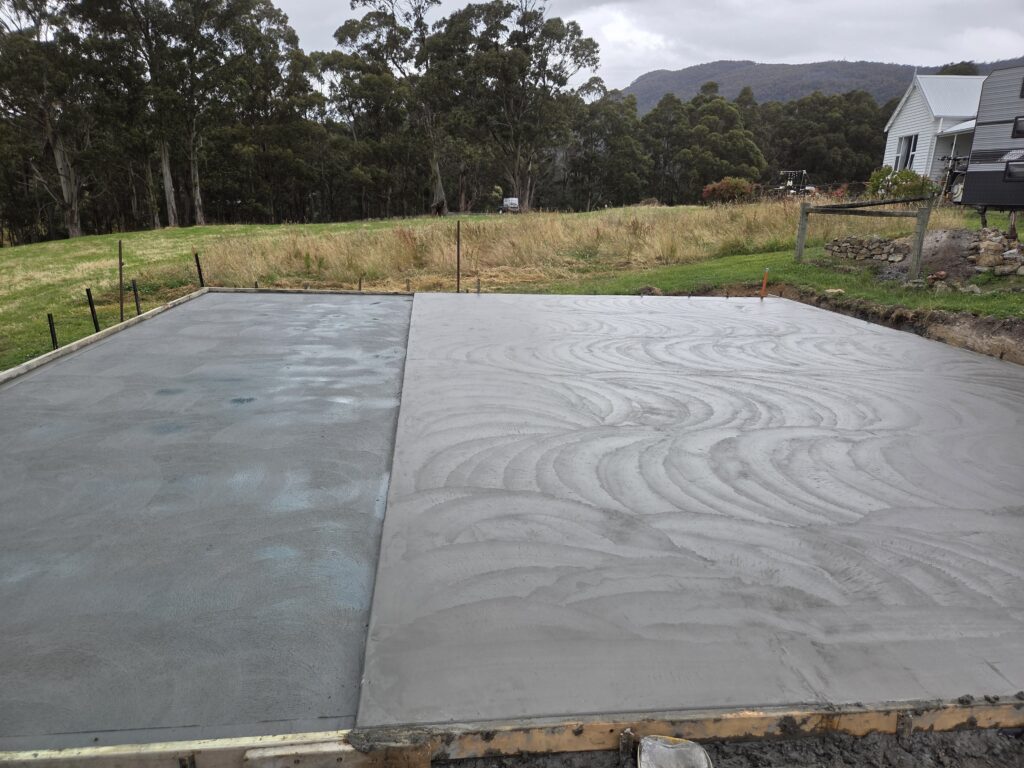
The right approach for your site
Start with a solid base.
We pour shed and house slabs across southern Tasmania. Share your plans and site details so we can discuss the preparation and concrete work required.
Every site is different. We will talk through access, the proposed layout and the next steps with you before providing a quote.
- Shed slabs
- House slabs
- Site preparation
- Footings and concrete work
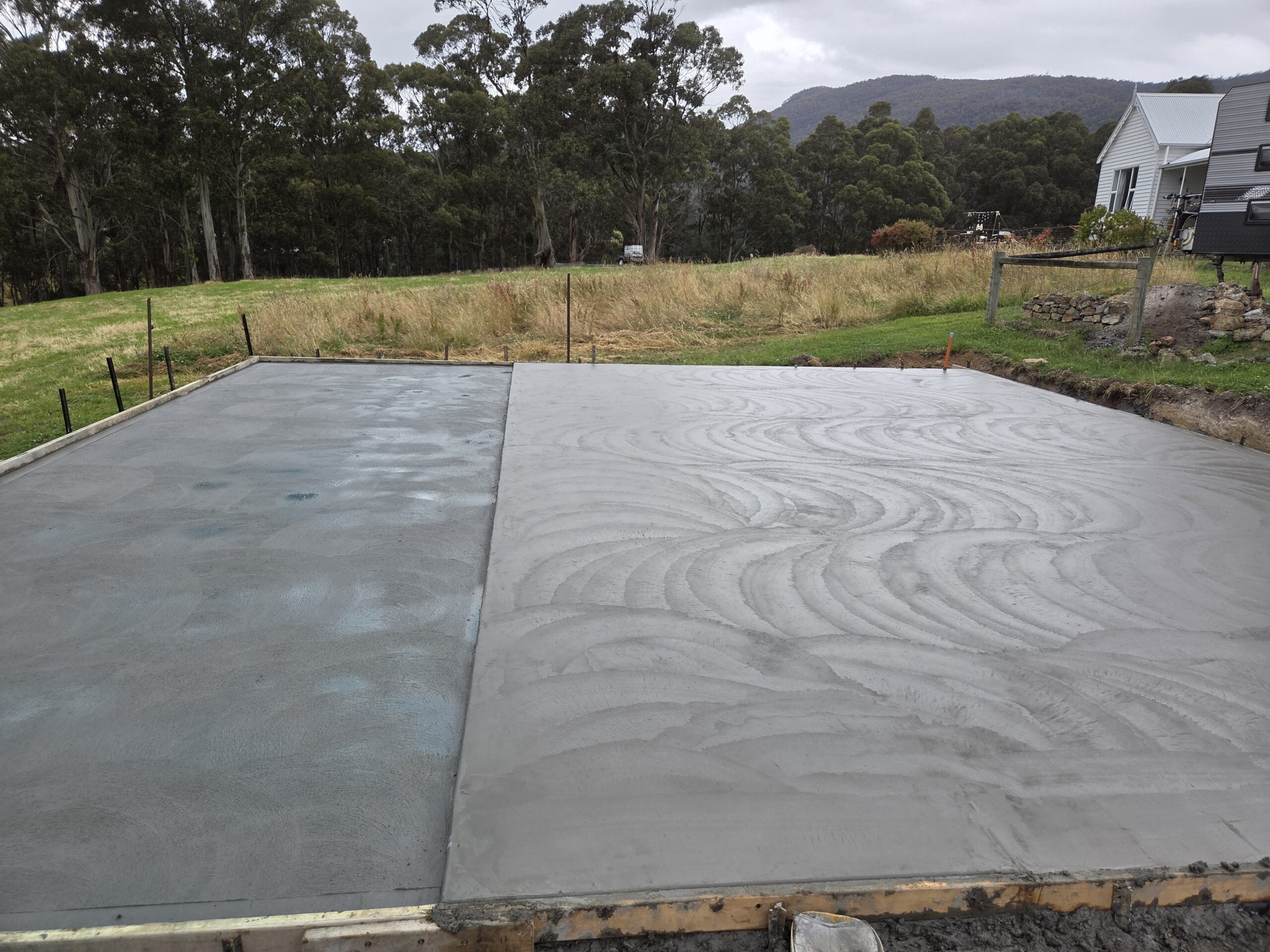
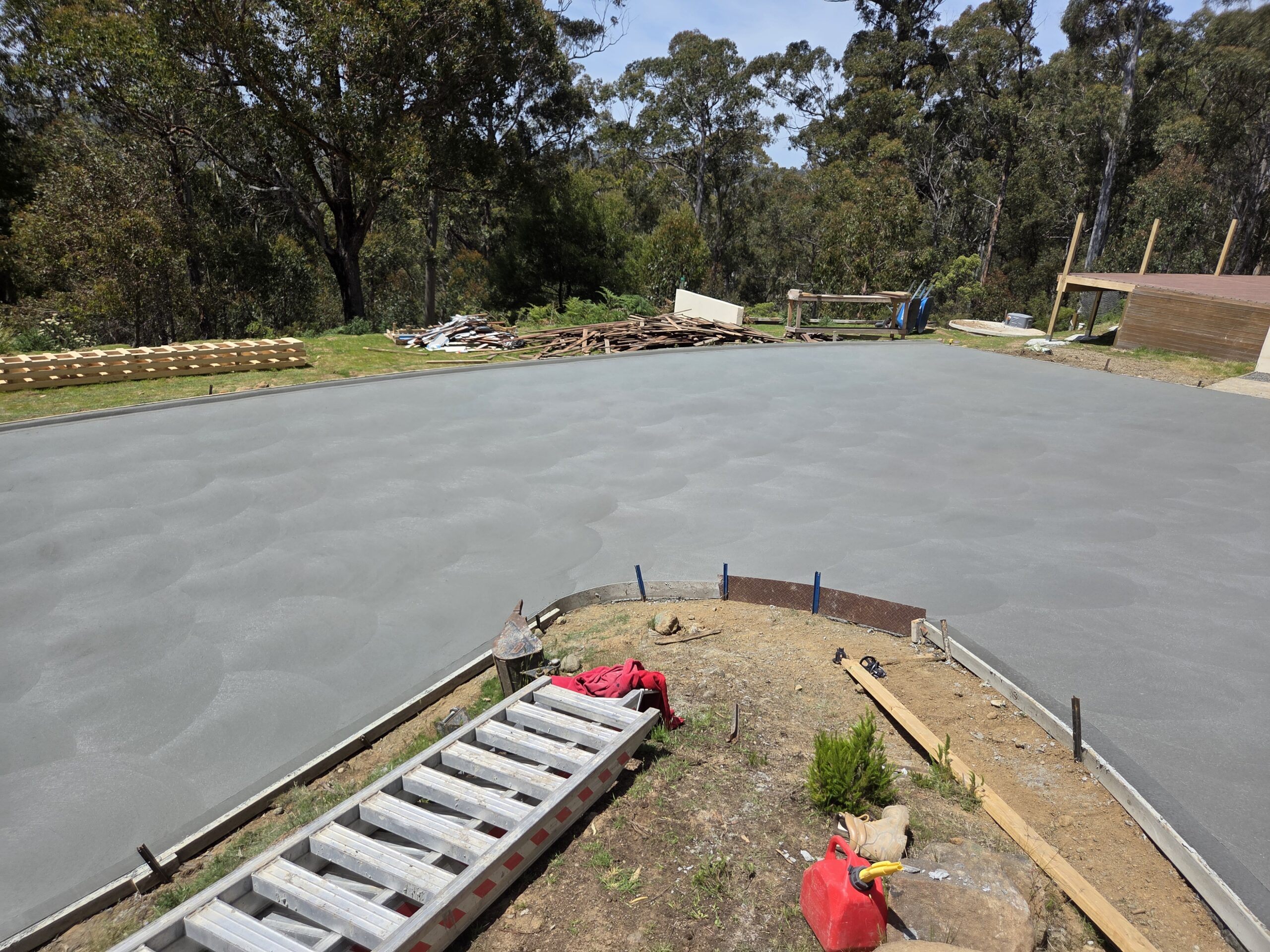
From our own projects
A closer look at our work.
How much does a shed slab cost?
It depends on the size of the slab, how much site cutting and levelling is needed, access, thickness, reinforcing, and any thickened edges the shed manufacturer specifies. We’ll quote from your shed plans or measurements, and the quote is free.
How thick should a shed slab be?
Many garden sheds and garages sit on a 100mm reinforced slab, but larger sheds, and sheds for vehicles or machinery, often need a thicker slab or thickened edges. Always follow the shed manufacturer’s or engineer’s slab design, and we’ll build to it.
Do I need a permit for a shed in Tasmania?
Small sheds can be low-risk work with no building permit: a standard shed up to 18m², or an engineer-designed kit shed up to 36m² (you notify council with a Form 80), as long as walls are no higher than 3.6m and the ridge no higher than 4.5m. Boundary setbacks and planning rules still apply, so check with your council before you order.
What's needed before a house slab is poured?
A house slab is built to an engineer’s design based on your site’s soil classification. Before the pour, the site is cut and levelled, plumbing is roughed in by a licensed plumber, termite protection and reinforcing go in, and the building surveyor usually needs to inspect the reinforcing before any concrete is placed.
How much is a cubic metre of concrete in Tasmania?
Concrete prices vary with the supplier, the strength of the mix, the quantity and how far the truck has to travel, and small loads often attract extra part-load fees. When we do your slab, the concrete is included in our price, so you don’t need to order it yourself.
How long does a concrete slab take to cure?
You can usually walk on a new slab after about two days, and it’s strong enough for light use after about a week. Concrete keeps gaining strength for around 28 days, so heavy loads and machinery should wait until then.