
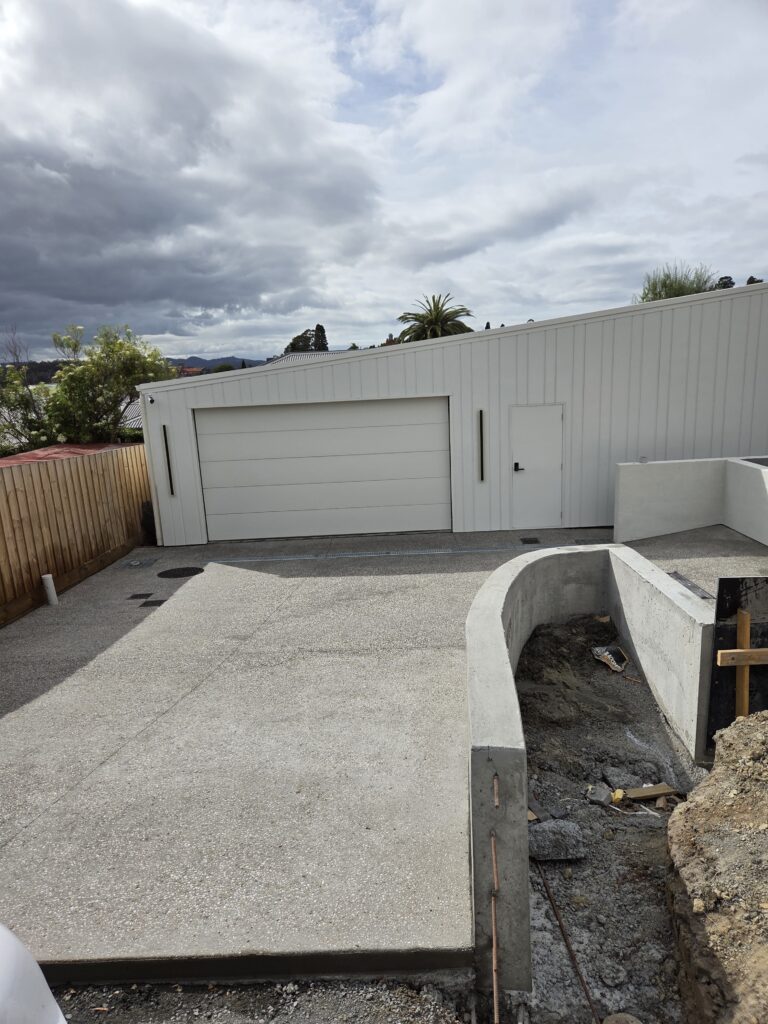
The right approach for your site
A finish that suits your home.
From a new driveway to the path around your home, we work with you to plan concrete that suits the property and the way you use it.
Exposed aggregate is one of our specialities. We can talk through the finish, layout and drainage before the work begins.
- Concrete driveways
- Exposed aggregate finishes
- Paths and access ways
- Outdoor entertaining areas
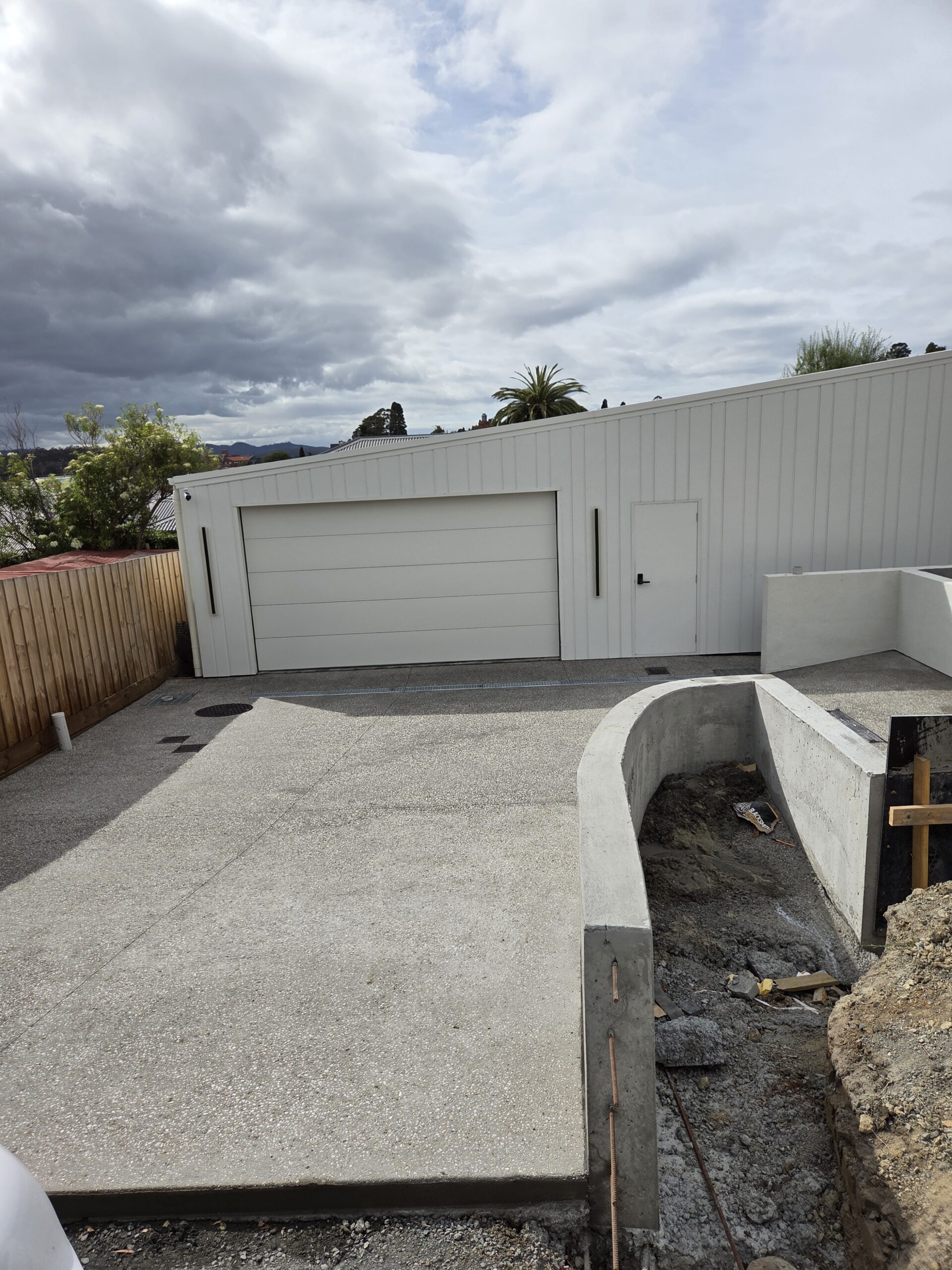
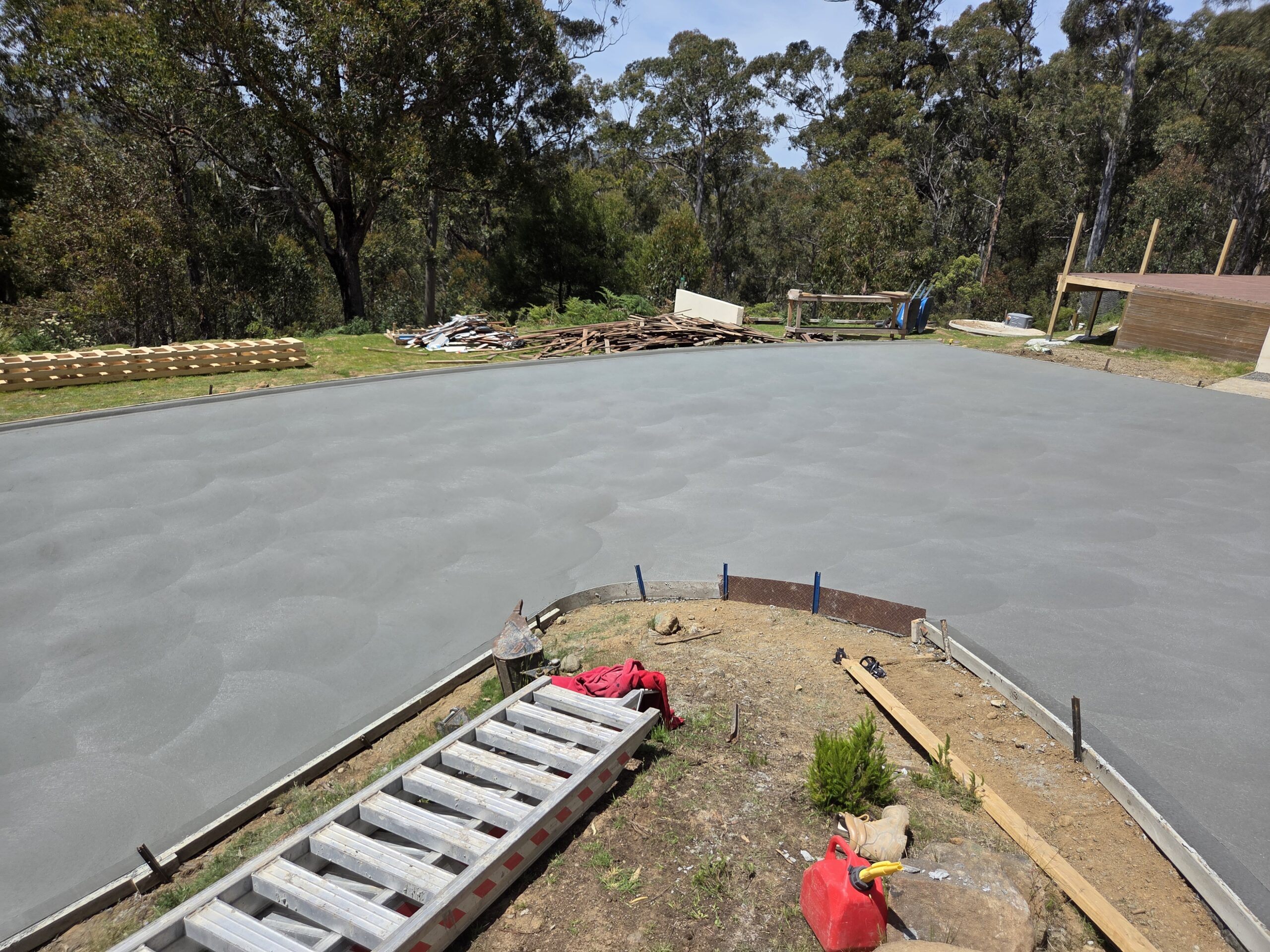
From our own projects
A closer look at our work.
How much does a concrete driveway cost in Tasmania?
It depends on the size of the area, how much digging and base preparation the site needs, access for the truck, the thickness and reinforcing, and the finish you choose (plain, coloured or exposed aggregate). Removing an old driveway also adds to the job. Every site is different, so the most reliable way to know is an on-site quote, which is free.
Is exposed aggregate good for a driveway?
Yes. Exposed aggregate is hard-wearing, has a textured surface that gives good grip in the wet, and hides tyre marks and dirt better than plain concrete. It takes extra finishing work, so it usually costs a little more than a plain finish, and it should be resealed from time to time to keep it looking its best.
Is it cheaper to concrete or pave a driveway?
Plain concrete is usually the cheaper option per square metre and needs less upkeep, with no joints for weeds to grow through or pavers to sink. Pavers can be lifted to repair one section, but over the life of a driveway concrete is generally the lower-maintenance choice.
How long before I can drive on a new concrete driveway?
As a general guide, you can walk on new concrete after about two days and drive a car on it after about seven. Concrete keeps gaining strength for around 28 days, so keep heavy vehicles off until then. We’ll give you specific advice for your job on the day of the pour.
What are common problems with concrete driveways?
Most problems are cracking, sinking or water pooling, and they usually come from what’s underneath: a poorly compacted base, missing or badly placed control joints, or no fall for water to run off. Good base preparation, reinforcing, correctly spaced joints and proper falls prevent most of them.
How thick should a concrete driveway be?
A typical residential driveway is around 100mm thick with steel reinforcing mesh. If it needs to carry heavier vehicles such as trucks, caravans or machinery, it should be thicker and more heavily reinforced. We’ll recommend the right specification for how you’ll use it.